If you run a big-box store, you’ve heard the same diagnosis over and over: “You need more staff on the floor.”
After another week of customer complaints, missed sales targets, and watching your team burn out, it can feel like this is your only option.
But here’s what you already know: You have people. They’re working hard. Your managers are running non-stop. Your associates are trying their best. And still, customers can’t find help when they need it.
The problem isn’t how many people you have. It’s that nobody, including you, can see where those people need to be until it’s too late.
Why It Looks Like a Staffing Problem (But Isn’t)
Walk into any big-box store during a busy shift and it feels understaffed. Customers wandering the aisles looking lost. Your traditional call buttons going unanswered. Lines forming at locked cases. Your floor manager sprinting from crisis to crisis.
It looks like you need more people on the floor.
But then you see something strange: An associate standing idle near an empty aisle while three customers are stuck waiting at a locked case on the other side of the store. Two team members chatting near the break room while someone in appliances has been trying to flag down help for five minutes. Your best salesperson stuck restocking when a high-value customer just walked into their department.
You don’t have a staffing problem. You have a visibility problem.
What’s Really Happening on Your Store Floor
Here’s the thing: Your associates aren’t lazy. Your managers aren’t incompetent. They’re just making decisions with incomplete information. In some cases, with no information at all.
Think about what happens when a customer needs help in your store:
- The customer looks around for an associate (who might be three aisles over)
- Maybe they press a call button (that goes… where exactly?)
- Maybe they find someone (who then has to find the right person)
- Or (most often) they just leave
Your team never sees:
- The customer who gave up in sporting goods while your sporting goods expert was in the back
- The locked case that’s been sitting untouched for 8 minutes
- The pattern that Tuesday mornings always spike in demand in garden center (this can be hard to measure if you’re using sales as as your signal)
- The fact that customers are waiting an average of 6 minutes when 2 minutes is your target
Your managers are running around putting out fires. But they can’t see the fires that already burned out. The customers who left, the sales you lost, the opportunities that never happened.
What This Invisibility Is Actually Costing You
The frustrating part? You can’t fix what you can’t see.
You know your daily sales numbers. You track labor costs. You monitor shrink. But when it comes to customer service on the floor, you’re flying blind. You don’t know:
- How many service requests went unanswered today?
- How long customers actually waited for help?
- Which departments are bleeding opportunities to close the sale?
- Whether your locked merchandise strategy is costing you more than it’s protecting?
You see the symptoms: customer complaints, declining sales, burned-out staff. But you can’t pinpoint exactly where the breakdowns are happening or when they’re worst.
So you do the only things you can think of: Schedule more people (and blow your labor budget). Tell managers to “pay more attention” (which just makes them feel like they’re failing). Remind your team to “stay alert” (even though they’re already trying their hardest).
And somehow, nothing gets better.
Here’s Why Adding More Staff Doesn’t Actually Help
Let’s say you decide to hire two more associates. Great, right?
Except now you have a new problem: If you couldn’t effectively direct your existing team to where customers needed help, how does adding two more people change that? You’re still guessing.
Now you just have more people wandering around without clear direction, more coordination headaches, and a higher labor expense… all with the exact same visibility problem you started with.
The core issue was never about the number of people on your floor. It was about knowing where those people needed to be, when they needed to be there, and who was best suited to help.
Here’s something most operators eventually realize: Even on your slowest Tuesday morning, you probably have enough staff to handle every single customer who walks in. The problem is they’re all clustered in the wrong areas, completely unaware that someone three departments over desperately needs assistance.
You don’t need more coverage. You need smarter coverage.
The Three Things You Actually Need to See
To run your floor effectively, you really only need visibility into three things:
1. Where help is needed right now Not just “someone pressed a button somewhere.” You need specifics: “Customer waiting at locked case in power tools, been there 3 minutes.”
2. Who should respond Not “somebody go check on that.” You need: “Mike, you’re 30 seconds away, available, and you’re the tools specialist…this is yours.”
3. What you’re missing Not “feels like sales are down.” You need data: “You missed 14 service requests in garden center yesterday between 2-4pm. That’s why.”
When you have this kind of visibility, something shifts. Your existing team (the same people you have right now) becomes seriously more effective. Associates stop wandering aimlessly and start responding with purpose. Managers stop playing human dispatcher and start actually managing. You stop guessing and start knowing.
What Happens When You Can Actually See What’s Going On
Once you can actually see what’s happening on your floor in real-time, patterns start jumping out at you:
- The same departments spike at the exact same times every single week
- Certain departments are causing more bottlenecks because your team doesn’t feel confident accepting requests
- Most of those “we’re so short-staffed” shifts just had everyone standing in the wrong places
- Small adjustments to coverage patterns (not total headcount) create massive improvements
- Your team is genuinely relieved to finally know where to go instead of guessing all day
An operator we talked to put it this way:
“I was convinced I needed three more people. Turns out I just needed my five existing people to actually know what was happening on the floor.”
This Isn’t Your Fault, The System Changed
Here’s something important to understand: You were never supposed to run a store floor completely blind like this.
Traditional retail was built on a simple assumption: managers could physically see most of what was happening. When stores were smaller and product selection was simpler, that worked. A good manager could scan the floor, notice where customers were clustering, and shift people around accordingly.
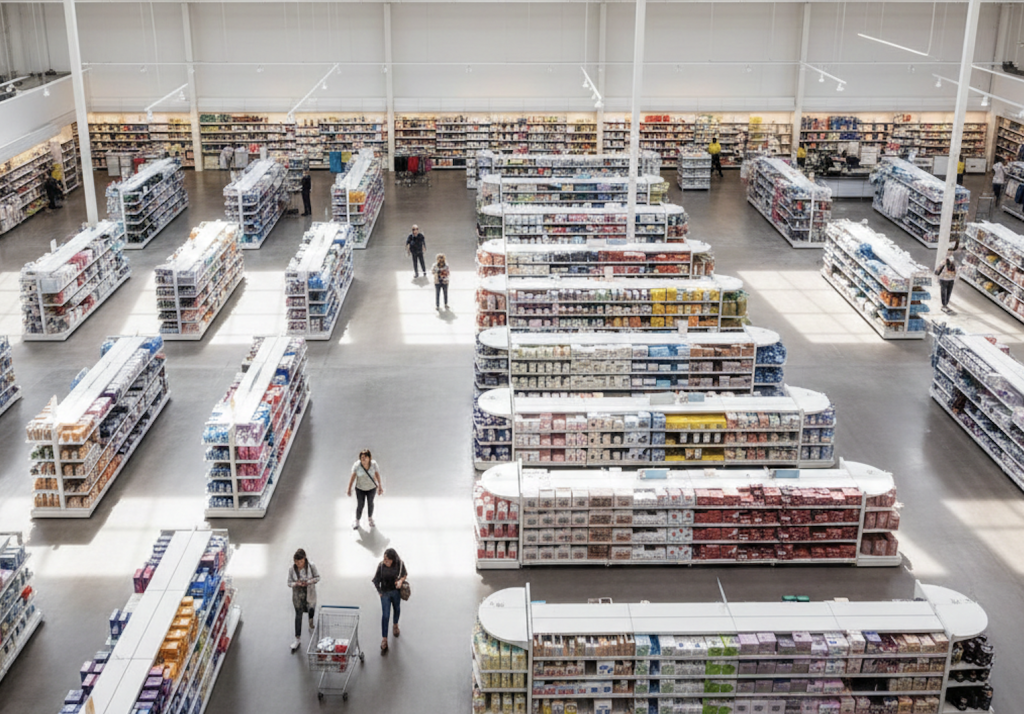
But big-box retail completely broke that model. Your sales floor is enormous. You’re managing tens of thousands of SKUs. Customers are scattered across a dozen different departments. No manager can physically see it all. No associate can possibly know where they’re needed most.
The retail environment fundamentally changed, but the management tools didn’t keep up.
So no, you’re not failing at managing your store. You’re trying to manage something that has become functionally invisible to you. And you’re doing it with the same old methods: radio calls, managers running around, hoping for the best…that worked fine in a completely different era of retail.
What Running Your Store Could Look Like
Imagine starting your shift tomorrow and being able to see:
- That locked case in power tools has had 7 customer requests this week, with people waiting an average of 9 minutes each time
- Your appliance department is about to get slammed (because it happens every single Thursday around 11am)
- The associate near customer service could handle that plumbing question way faster than pulling someone from the stockroom
- Your Tuesday afternoon coverage is actually perfect, but Tuesday mornings? That’s where you’re bleeding sales.
Imagine your associates getting clear, specific direction instead of wandering around hoping they’re in the right place. Your managers spending their time on actual strategy instead of playing human dispatcher all day. Your whole team working efficiently instead of just working hard.
That’s not some far-off futuristic vision. That’s just what normal operations look like when you can actually see what’s happening in real-time.
You’re Doing Everything Right With the Information You Have
Look, you’re already juggling P&L pressure, tight labor budgets, rising customer expectations, corporate compliance standards, and a thousand daily emergencies. You’re doing everything right with the tools and information you currently have access to.
The problem isn’t you. The problem is that you don’t have the information you need to make good decisions.
You can’t hire your way out of invisibility. You can’t “manage harder” your way past it. And you definitely can’t fix problems you literally cannot see.
But here’s what changes when you can see what’s actually happening: When you know exactly where customers are waiting, which associate should respond, and what patterns are quietly draining your sales, everything shifts.
Not because you suddenly hired a bunch more people. But because the team you already have can finally work the way they’ve always wanted to work: efficiently, purposefully, effectively. With clear direction instead of constant guessing.
The real reason customers can’t find help in your store isn’t a staffing problem.
It’s a visibility problem.
And that’s actually good news, because visibility problems are a lot easier to solve than staffing problems.
About this post: Written for store operators and independent dealers who are sick of hearing “just hire more people” when they know the real problem runs deeper. If this resonates with your experience, you’re not alone, and you’re not wrong about what you’re seeing on your floor.